Guides
The DistroKid alternative you can start for free
In short
- 1Start free. No yearly fee.
- 2Go Pro for £8 a month and keep 100%.
- 3Stop any time. Your music stays live.
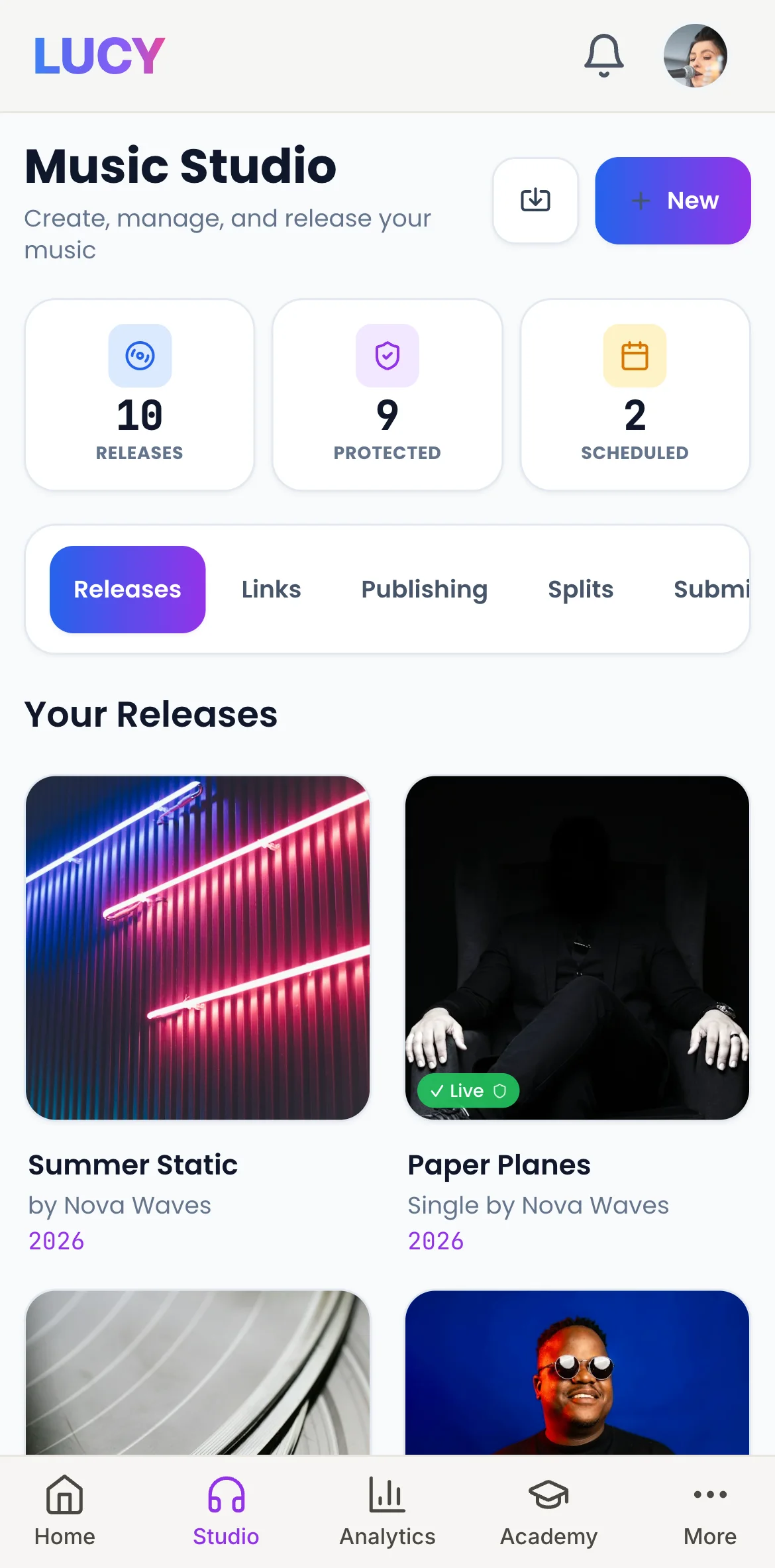
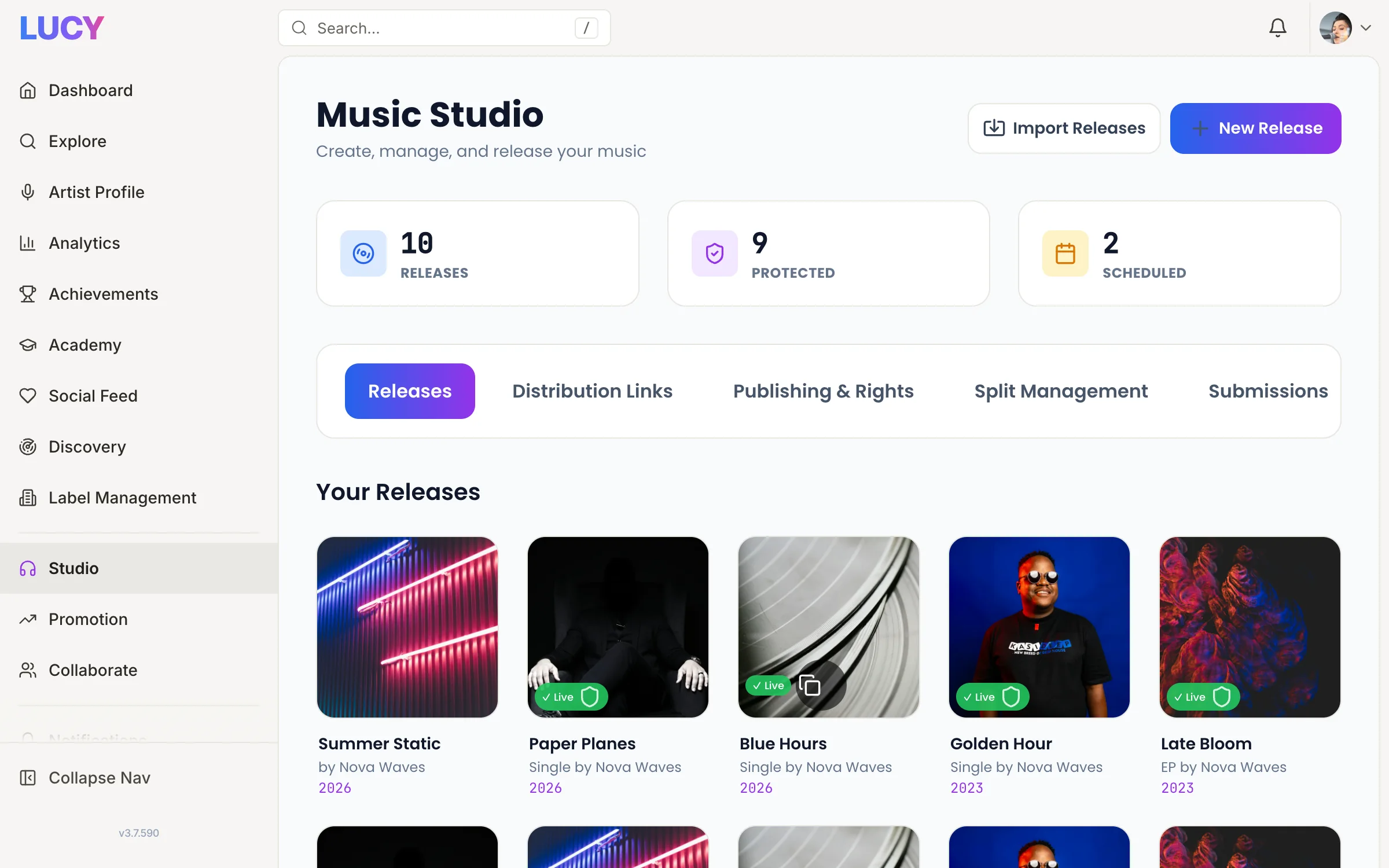
Release today for £0
DistroKid asks for a year upfront before your first song goes out. On LUCY you can release today without paying anything.
- Free: release once a month to 470+ stores and apps
- Pro: £8 a month. Release as much as you like and keep 100%
- Month to month. No contract, stop any time
- Stop Pro and your music stays live on Free
One app to release and promote
Put your song out, then get it heard, from the same place.
- Smart links and pre-saves on every plan, Free included
- A free Academy: short lessons on royalties, rights and releasing
- Collect fan emails on your link page and download the list
- On Pro: post to every social app with LUCY AI drafts, split royalties and collect from YouTube Content ID
How LUCY compares
Prices from each company's own website, checked on 5 October 2026.
- LUCY: Free £0, LUCY keeps 30%. Pro £8 a month, LUCY keeps 0%. Month to month.
- DistroKid: from $24.99 a year, paid upfront. No free plan.
- TuneCore: from $24.99 a year. No free plan. Keeps 20% of TikTok, Facebook, Instagram and YouTube money.
- CD Baby: $9.99 per single, $14.99 per album. Keeps 9% of streaming money and 30% of social video money.
- RouteNote Free: no upfront cost. Keeps 15%.
When Pro pays for itself
Once your songs earn more than about £27 a month, Pro's £8 costs less than the 30% Free keeps. Switch any time and your songs keep their plays.
Moving from DistroKid
Bring each release with the same ISRC codes, titles and audio, so stores can match it to its history. Make it live on LUCY first, then take it down at DistroKid. The full steps are on LUCY vs DistroKid.
Your rights stay yours
On every plan you keep your masters and your copyrights.
Questions? Easy answers.
Is there a free alternative to DistroKid?+
Yes. LUCY Free lets you release to 470+ stores and apps for £0, with smart links, pre-saves and the Academy included. When your music earns more, Pro keeps 100% for £8 a month.
Do I have to pay for a year upfront?+
No. LUCY is month to month and you can stop any time. DistroKid's plans are billed yearly.
Does LUCY take a cut of my royalties?+
On Pro and Label, no: you keep 100%. On Free, LUCY keeps 30%.
Can I move my songs from DistroKid to LUCY?+
Yes. Use the same ISRC codes, titles and audio, so stores can try to keep your plays and playlists; nobody can promise it. Make each release live on LUCY before you take it down at DistroKid.
Does LUCY charge in dollars?+
No. LUCY prices are in British pounds. If you pay with a dollar card, your bank converts it at checkout. In the iPhone app, the App Store shows the price in your own currency.